What Makes a Rigid Box Different
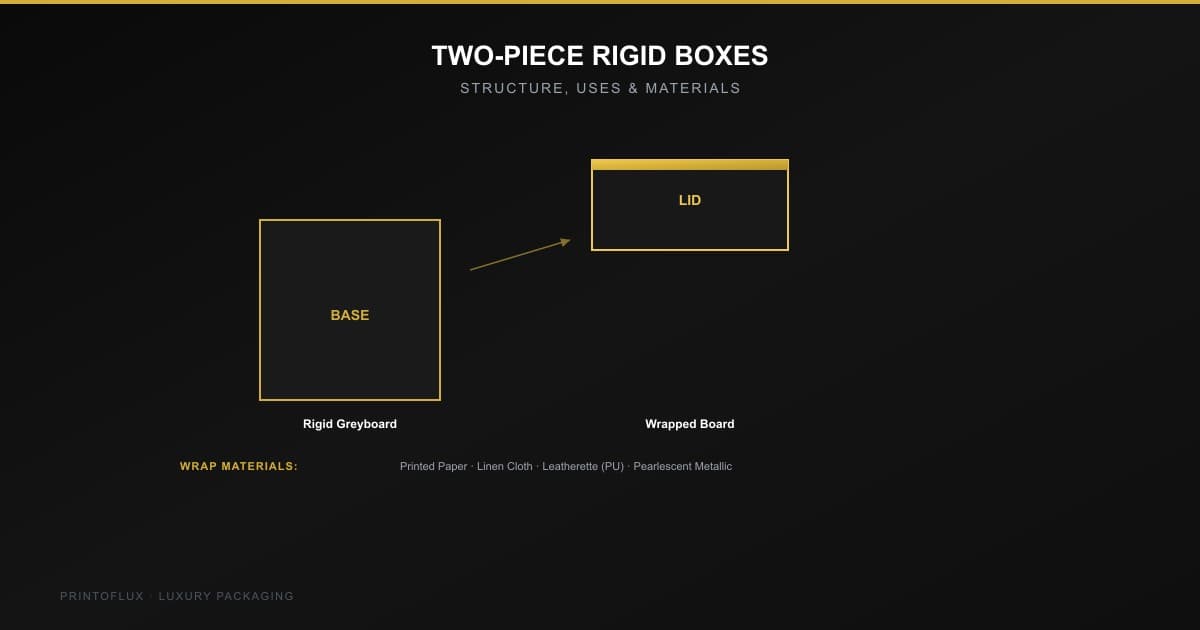
Unlike a tuck-end carton or RSC shipping box — both cut and folded from a single flat blank — a rigid box is built from two separate pieces (a base and a lid), each constructed from thick, non-folding greyboard (typically 1.5–3mm) wrapped in a separate decorative material. Nothing about a rigid box folds flat; it holds its shape permanently, which is exactly the point — the weight and rigidity in your hands is what signals "premium" before a customer even opens it.
This is the structure behind perfume boxes, luxury cosmetics, premium electronics packaging, jewellery boxes, and corporate gift sets.
Base and Lid: How the Two Pieces Work Together
The base is built to the product's actual inner dimensions plus enough wall height to hold it securely. The lid is built slightly larger than the base — enough clearance (typically 1–1.5mm per side) for it to slide over the base smoothly without binding, but tight enough that it doesn't wobble. Lid depth varies by style: a shallow lid that only covers the top few centimetres reads as more minimal and modern; a deep "shoulder box" lid that covers most or all of the base height reads as more substantial and traditional.
What It's Made Of
The core structure is rigid greyboard — thicker board than any folding carton uses, since it needs to hold its shape without any fold-lock mechanism.
The wrap material is where a rigid box's personality comes from, and it's a genuinely wide range:
- Printed paper wrap — the most common and most flexible for full-colour branding, laminated matte or gloss for durability.
- Linen or textured cloth wrap — reads as heritage/craft, common in stationery boxes and premium book-adjacent packaging.
- Leatherette (PU leather) — the default for a high-end, corporate-gift feel, often combined with foil-stamped branding.
- Specialty finishes — pearlescent or metallic wraps for cosmetics and fragrance packaging where shelf standout matters most.
See our guide on hot foil stamping finishes for how foil branding is typically applied to a rigid box's wrap material.
When the Extra Cost Is Worth It
Rigid boxes cost meaningfully more per unit than folding cartons — more material, more labour (each piece is hand- or machine-wrapped, not just folded), and no flat-shipping savings. That cost is justified when:
- Unboxing is part of the product experience — fragrance, luxury cosmetics, premium electronics, and gift sets where the packaging is judged as part of the purchase.
- The box is reused — jewellery boxes and premium gift boxes are often kept by the customer long after the product inside is gone, extending brand exposure well past the point of sale.
- Low-to-moderate volume — rigid box economics work best at smaller runs where the folding-carton cost advantage at scale doesn't apply as strongly.
For high-volume retail packaging where shelf cost per unit matters more than unboxing ceremony, a tuck-end carton is almost always the more sensible structure.
Getting the Wrap Sheet Size Right
Unlike a single-blank carton, a rigid box needs two separate wrap-sheet calculations — one for the base, one for the lid — based on board thickness, turn-in allowance, and lid clearance. Our Box Dieline Calculator works out both wrap sheet sizes directly from your box dimensions — or request a quote with your product dimensions and preferred wrap material for exact specifications alongside pricing.