What a Book-Style Rigid Box Is
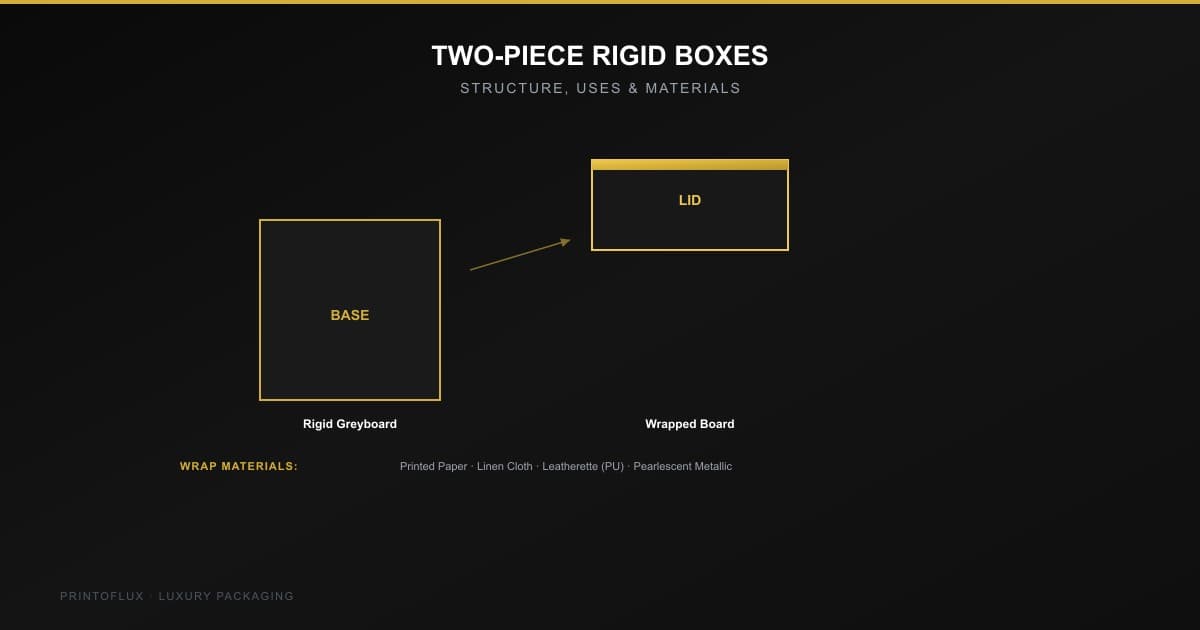
Most rigid boxes are two separate pieces — a base and a lid that lifts straight off or telescopes down over it, the classic gift-box shoebox action (see our guide on two-piece rigid boxes). A book-style rigid box works differently: the lid is hinged to the base along one edge and opens flat, like a hardcover book's front cover, usually held shut by an embedded magnet rather than friction. Lift the flap, and the whole interior — often a fitted insert cradling the product — is presented at once, the way a jewellery case or a presentation folder opens.

It's the structure behind most "magnetic gift box" or "magnetic book box" listings you'll see for fragrance, cosmetics, and premium retail packaging — recognisable by the branded cover panel that reads almost like a book jacket.
The Three Core Assembly Components
A finished book-style magnetic rigid box is made of three distinct sub-assemblies manufactured separately before final combining:
1. The 4-Panel Wrap-Around Sleeve (Cover)
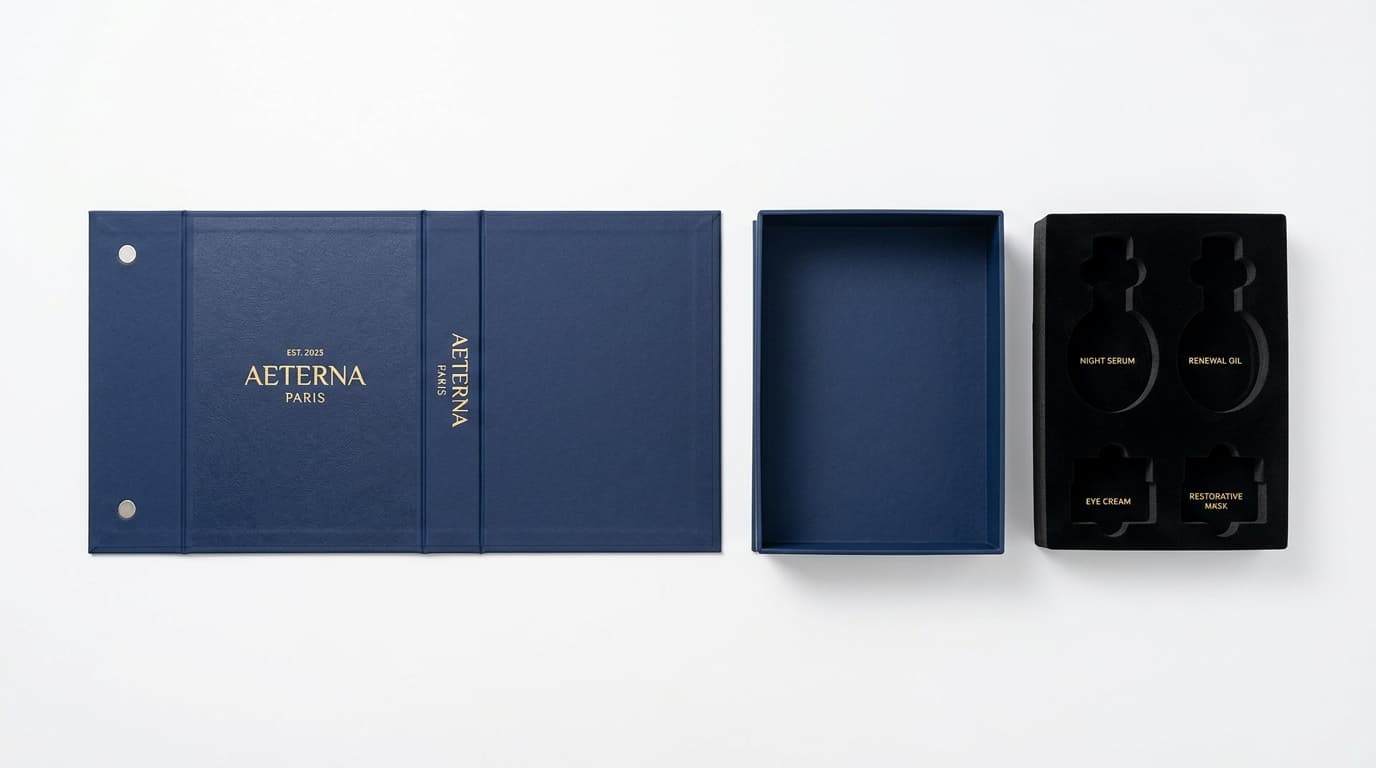
The cover isn't a second tray, and its four panels aren't sized independently either. It is built from four separate board panels — Front, Top, Back, and Bottom — glued a small gap (4–6mm) apart in a row, all wrapped by one continuous outer sheet, with turn-in folded over only at the two open ends. Because rigid board this thick (1.8mm–2.5mm) doesn't fold without cracking, each panel is an independent piece of greyboard; the small gaps between them, hidden under that one continuous wrap, are what actually flex — they're the real hinge, not a separate hinge tape.
Critically, the four panel depths aren't a styling choice you guess at: the sleeve is your base tray's own cross-section perimeter, unwrapped flat. Front and Back each run as deep as the base's own wall height; Top and Bottom each run as long as the base's other outer footprint edge. Get the base right, and the cover's panel sizes fall out automatically. Hidden high-grade neodymium magnets are countersunk into the front panel and the base wall before wrapping.
2. The 4-Sided Rigid Base Tray
The base is a straightforward rigid tray — a heavy board floor with four vertical walls assembled via 90° V-groove precision milling. The tray is wrapped in an outer paper sheet with turn-in allowances folded over the rim to the interior, then glued permanently onto the sleeve's Bottom panel — the one panel that sits flat beneath the base while the gaps between the other panels provide the flex.
3. The Custom Fitment / Insert
Inside the base sits the custom product cavity insert. Common materials include high-density die-cut EVA foam with velvet flocking (for perfume bottles, serum droppers, and skincare vials), thermoformed plastic trays, or folded SBS card bridges.
What It's Made Of
- The board: Rigid greyboard (Kappa board) — 1.5mm–2.5mm (1000–1600 GSM) is standard, providing structural stiffness that prevents flexing or bowing.
- The wrap paper: 157gsm coated art paper, virgin kraft paper, or specialty textured book cloth, finished with soft-touch matte lamination, hot foil stamping, and spot UV.
- The inner liner: A matching paper sheet glued across the inner faces of the cover panels to conceal the greyboard and wrap turn-ins.
- Rare-earth magnets: Pair of nickel-plated neodymium disc magnets (e.g., 10mm diameter × 1.5mm thickness) embedded flush into the board.
When This Style Makes Sense
The cover sleeve and its flat branded panel are what you're paying for, so this structure earns its cost when:
- The cover itself is the presentation — a large, uninterrupted wrap panel gives foil stamping, embossing, or a printed "jacket" more room to work than a lid's narrow top face does.
- The box is meant to be reopened — a magnetic hinge is a nicer repeat-use experience than lifting a telescoping lid on and off, which matters for fragrance and cosmetics boxes customers keep on a vanity.
- A fitted insert is doing the holding — this style is common specifically because the flat-opening cover gives full, unobstructed access to a shaped insert cradling bottles or jars, rather than reaching down into a deep base. See our perfume and cosmetics packaging guide for how that insert typically gets specified.
Calculate Your Book-Style Box Wrap Dimensions
A book-style box needs a base wrap, plus a wrap-around cover sleeve spanning four panels (Front, Top, Back, Bottom) and their hinge gap allowances — panel depths the tool derives straight from your base dimensions, not separate guesses.
👉 Launch the Free Book-Style Rigid Box Calculator Tool → to calculate exact open wrap sizes, board panel dimensions, and turn-in allowances directly from your finished box measurements.