Why Foil Reads as Premium Instantly
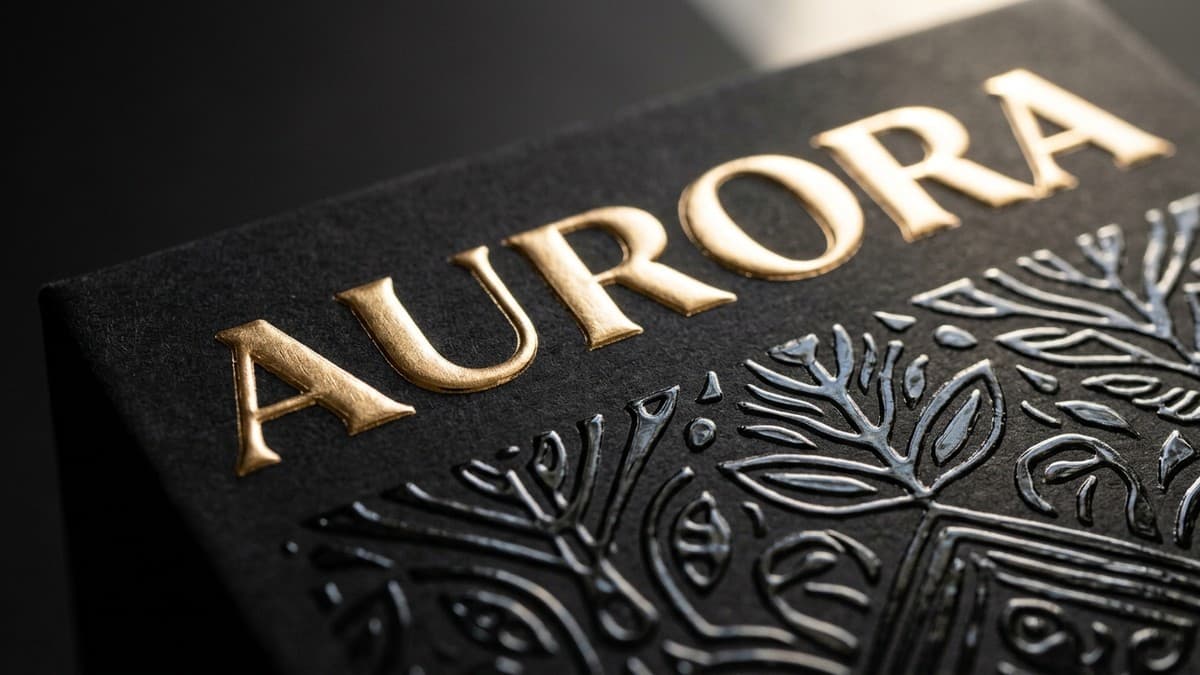
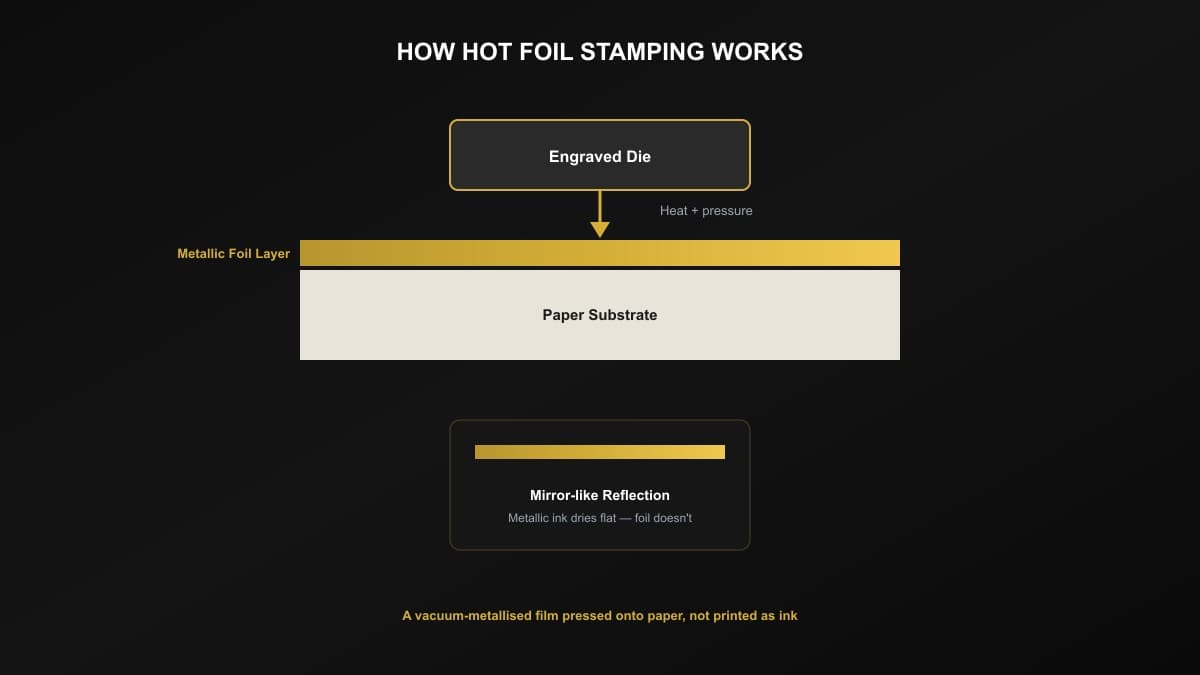
Standard metallic ink dries with a slightly dull, pigment-based sheen. Foil stamping is different — it presses a razor-thin layer of vacuum-metallised film onto the paper using heat and pressure, producing a genuine mirror-like reflection that catches light the way ink never can. That's why foil is one of the fastest ways to make a design read as premium the moment someone picks it up.
Foil Colours and Where Each One Fits
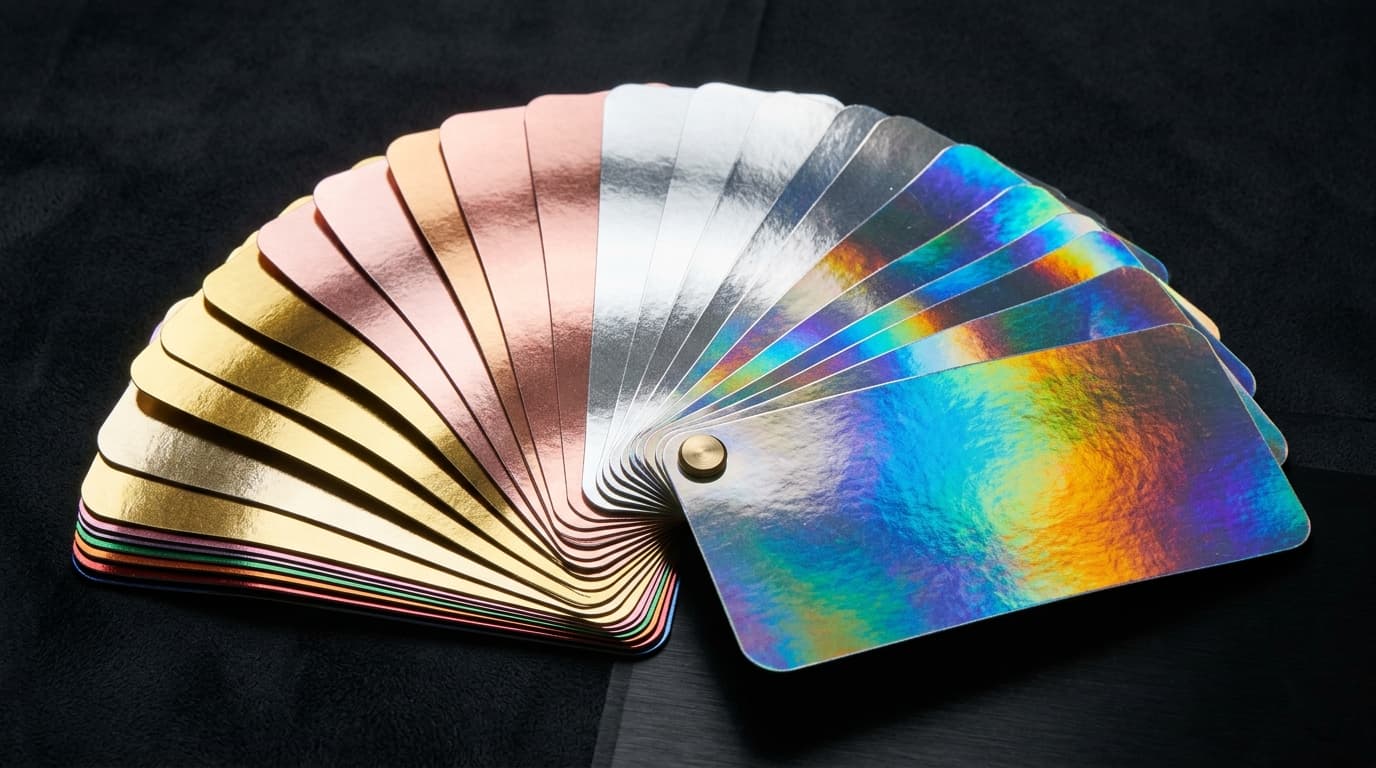
| Foil Style | Visual Characteristics | Best Used For |
|---|---|---|
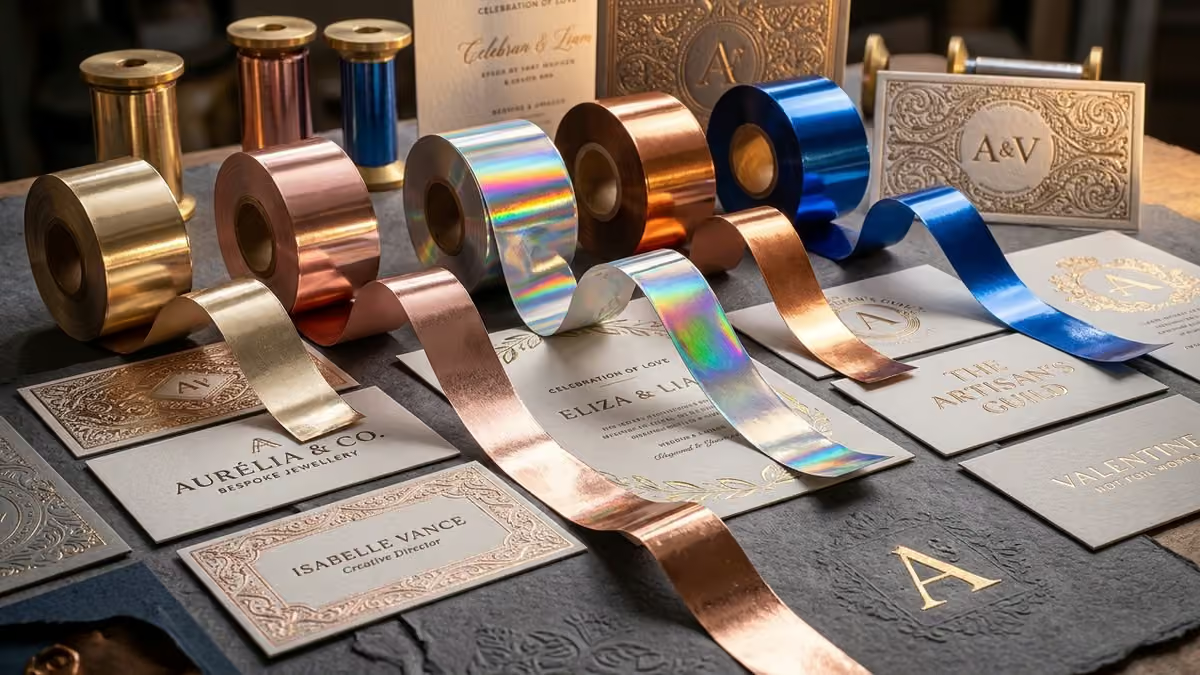
| Champagne & Rich Gold (Gloss) | Warm, reflective gold metallic sheen | Luxury perfume boxes, wedding invitations, certificate seals |
| Matte Gold / Satin Gold | Subtle brushed metallic sheen without harsh glare | Minimalist corporate stationery, architecture brochures |
| Rose Gold & Copper | Warm pinkish-gold metallic hue | Boutique skincare, luxury confectionery, fashion lookbooks |
| Holographic Rainbow | Prismatic light refraction that shifts colour with viewing angle | Security seals, VIP event tickets, modern streetwear packaging |
| Gloss Black & White Pigment | Deep opaque non-metallic gloss finish | Black-on-black typography, high-contrast branding |
Magnesium vs Brass Dies: Which One You Need
The die is the custom-engraved metal plate that presses the foil onto the paper.
- Magnesium dies are chemically etched and quicker to produce — a practical choice for shorter runs and simpler, single-level foil designs.
- Brass dies are CNC-machined and hold a crisp edge across very high-volume runs, and they're what makes combination foil + 3D embossing possible in a single press pass.
Which one makes sense for your job usually comes down to run length and whether the design needs raised (embossed) foil or a flat stamp — our finishing team can advise once they see the artwork.
Designing Foil-Ready Artwork
- Avoid ultra-fine hairlines. Very thin vector lines can foil unevenly or fill in — if your design leans on fine detail, check with our pre-press team on the minimum line weight for your specific die.
- Pair foil with the right base finish. Foiling over an unsealed ink layer can affect release and clarity — a matte or soft-touch laminate base generally gives the cleanest result.
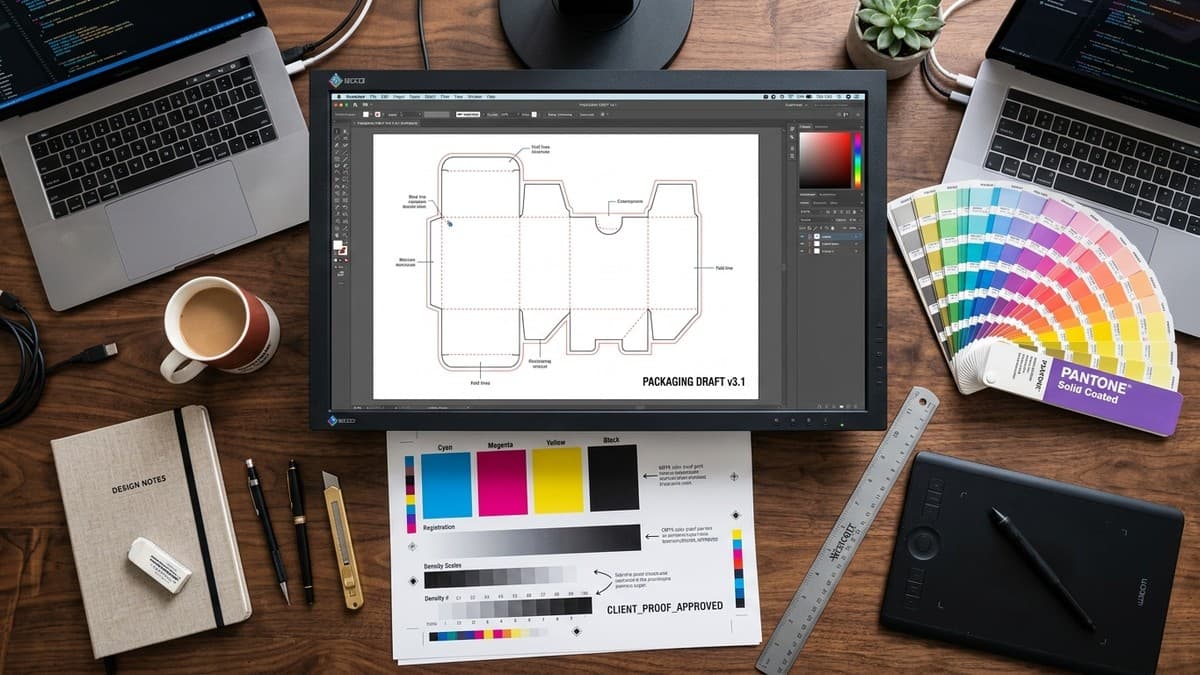
- Keep foil areas on their own spot-colour layer, not embedded inside the CMYK artwork — this keeps the die-making process straightforward and avoids registration issues.
Need custom foil-stamped packaging or luxury business cards in the UAE? Contact our finishing team for foil swatch samples before you commit to a colour.