What a Tuck-End Carton Actually Is
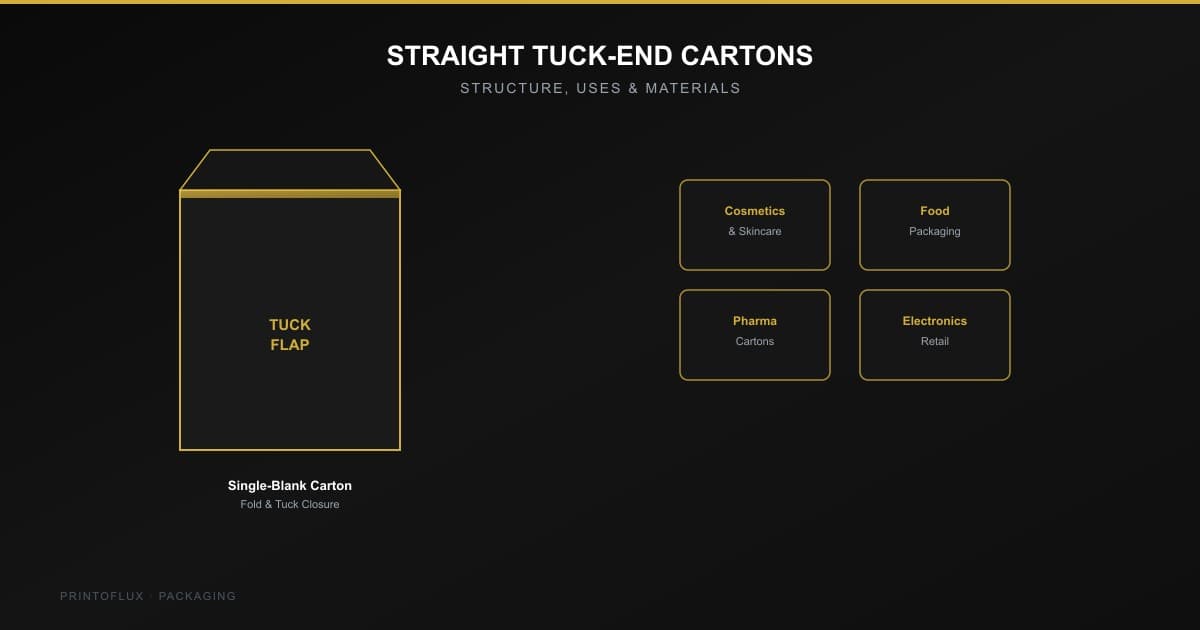
A straight tuck-end (STE) carton is cut and creased from a single flat sheet of board — no separate lid, no gluing at the top or bottom during assembly by the end user. The box closes by folding flaps at the top and bottom and tucking them into slots formed by the adjacent panels, locking shut without adhesive at the point of use. One side seam is glued during manufacturing to join the blank into a collapsible tube; everything else is fold-and-tuck.
This is the carton style behind most packaged retail goods you'd pick off a shelf — cosmetics boxes, pharmaceutical cartons, food packaging, small electronics, and cereal-style boxes.
Why Brands Choose This Structure
Cost efficiency at volume. A tuck-end carton uses less material than a rigid box (no separate board-and-wrap construction) and assembles flat for shipping — cartons ship as collapsed blanks and are erected at the point of packing, saving significant shipping volume compared to pre-formed boxes.
Fast automated packing. Because the structure is a single blank with a predictable fold sequence, tuck-end cartons run well on automated packing lines — a real factor for brands packing thousands of units.
Print real estate for branding. The full outer surface is one continuous printable panel before folding, giving designers a clean canvas for full-coverage branding, unlike structures with visible seams across panels.
What It's Made Of
Tuck-end cartons are typically made from folding box board (FBB) or solid bleached sulphate (SBS) board, generally in the 300–400gsm range depending on the product's weight and the level of rigidity needed. Coated art board is common when the design calls for high-gloss, vibrant colour reproduction; uncoated stocks are used when a natural, tactile finish fits the brand better (common in premium food or wellness packaging).
Finishing options layer on top of the base board — matte or gloss lamination for durability and shelf presence, spot UV or foil stamping on logos, and sometimes a soft-touch coating for a premium tactile feel. See our guide on premium finishes for how these choices affect perceived value.
When a Tuck-End Carton Isn't the Right Call
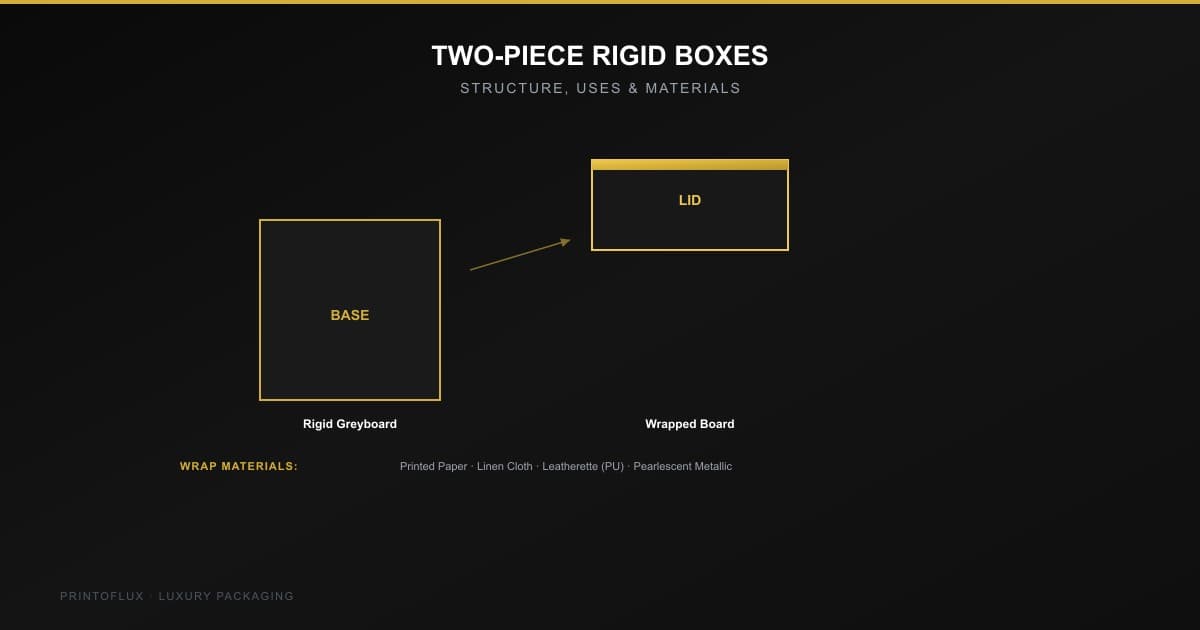
If the product needs to be displayed open with contents visible, weighs enough to stress a single-board structure, or is positioned as a luxury/gift item where unboxing experience matters more than shelf cost — a two-piece rigid box is usually the better fit despite the higher unit cost.
Getting the Dieline Right
The flat blank size depends on your box's length, width, and height, plus the glue flap and tuck-flap depth your design needs. Our Box Dieline Calculator works out the flat sheet size for a straight tuck-end structure directly from your box dimensions — or request a quote with your specs and our team will confirm exact production dimensions.