What GSM Actually Measures
GSM stands for grams per square metre — literally, the weight of one square metre of the paper sheet before it's cut down to your business card, brochure, or box. It's a measure of weight, not thickness, though the two are usually related: a heavier stock is almost always a thicker one too.
Most buyers run into GSM for the first time when a quote form asks "80gsm or 300gsm?" without much explanation. The honest answer is: it depends entirely on what you're printing and how it will be handled.
A Quick Reference
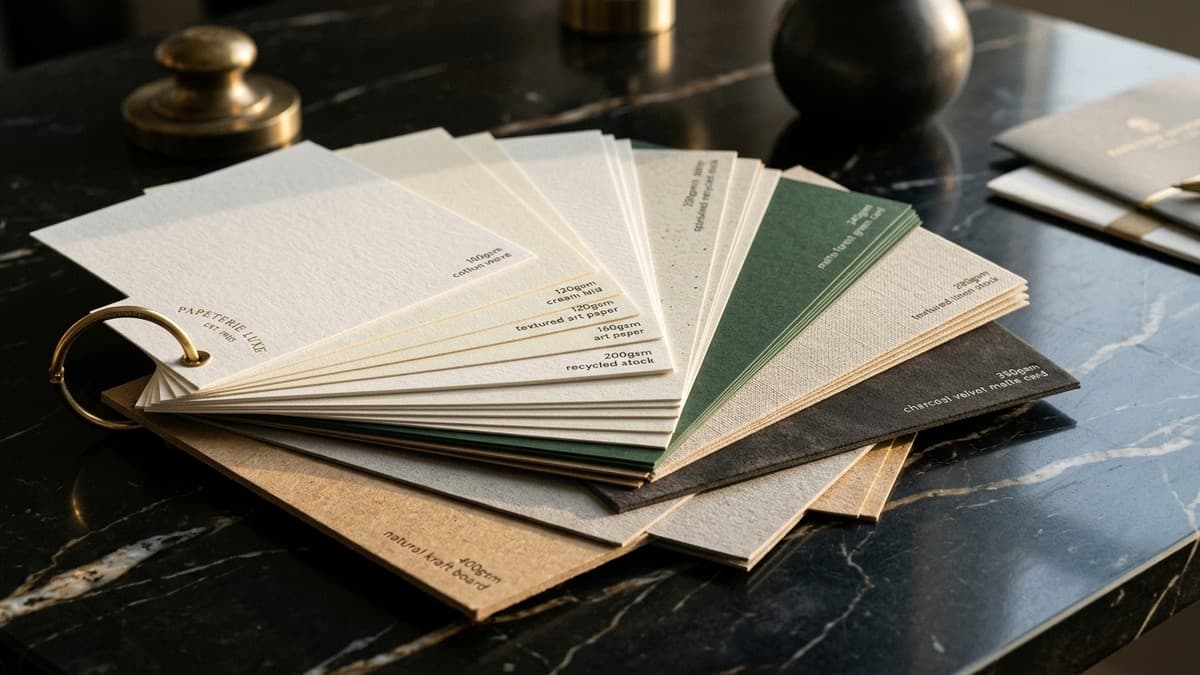
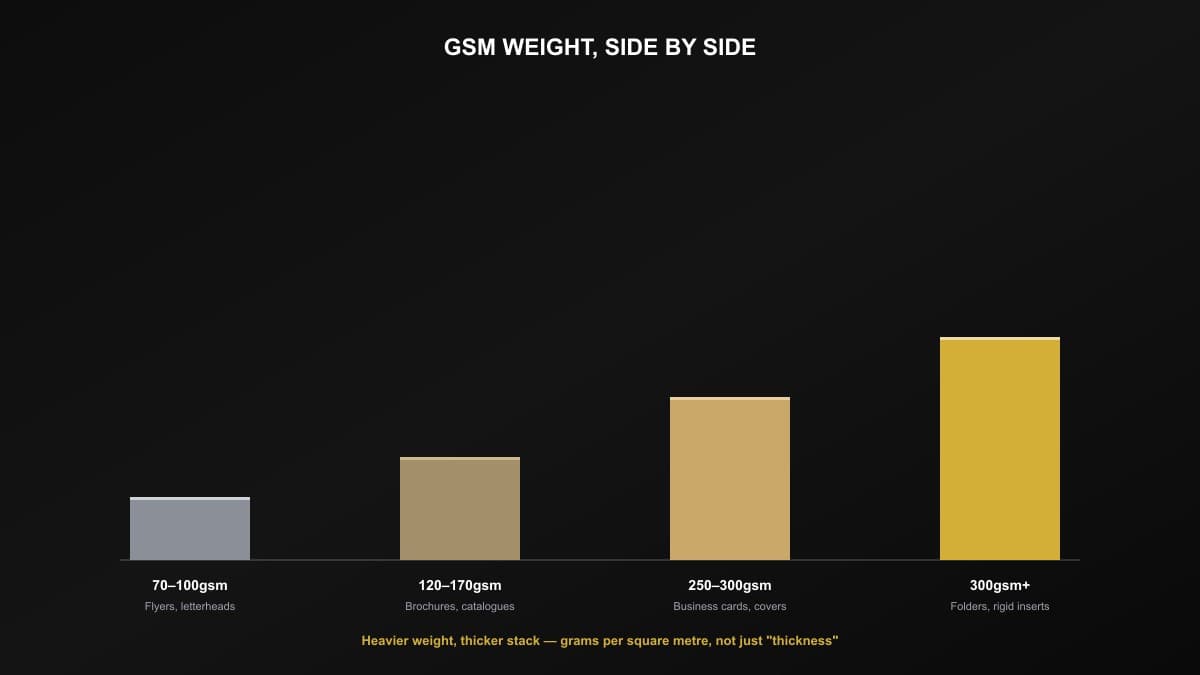
- 70–100gsm — Standard office paper, letterheads, internal memos, flyers meant to be read once and discarded.
- 120–170gsm — Brochures, magazine-style catalogues, quality flyers that need to feel more substantial without becoming rigid.
- 250–300gsm — Business cards, postcards, greeting cards, book covers. Stiff enough to stand up to handling.
- 300gsm and above — Presentation folders, luxury packaging inserts, rigid box components.
Coated vs Uncoated at the Same Weight
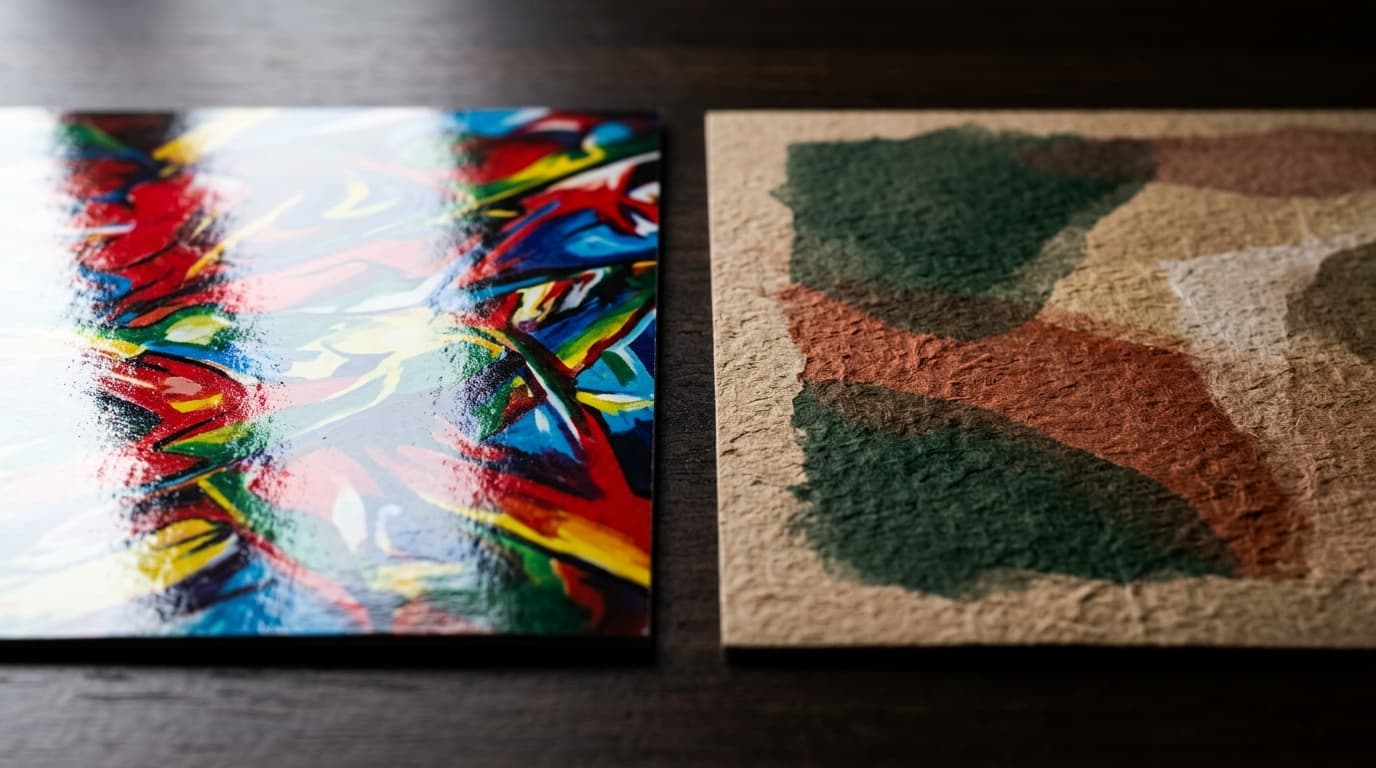
Two sheets at the same GSM can feel completely different depending on finish. A coated (gloss or silk) stock at 170gsm reads as sharp and vibrant — ideal for photo-heavy brochures. An uncoated stock at the same weight feels warmer and more tactile, and takes ink differently — often the better choice for letterpress-style branding or anything meant to be written on.
Why This Matters Before You Print, Not After
GSM affects more than feel — it changes how a job folds, how it survives shipping, and how many sheets fit safely through a finishing machine for embossing or foiling. Specifying the wrong weight is one of the more common, and expensive, reasons a job needs a reprint.
A Faster Way to Decide
If you already know your finished size and the general category — business card, brochure, box — our Paper Calculator tool will help you work out sheet layout and wastage once you've settled on a weight. Our production team is always available to sanity-check a spec before it goes to print.