Why Trim Size Comes Before Everything Else
Trim size — the final, cut dimensions of a printed page — is one of the first decisions a book project needs, not one to leave until layout is underway. It affects how many words fit per page (and therefore total page count), which paper stocks are economical to run, what binding methods are viable, and even how the finished book feels to hold. Changing trim size after design work has started usually means redoing the layout from scratch, not just adjusting margins.
Common Trim Sizes and What They're Actually For
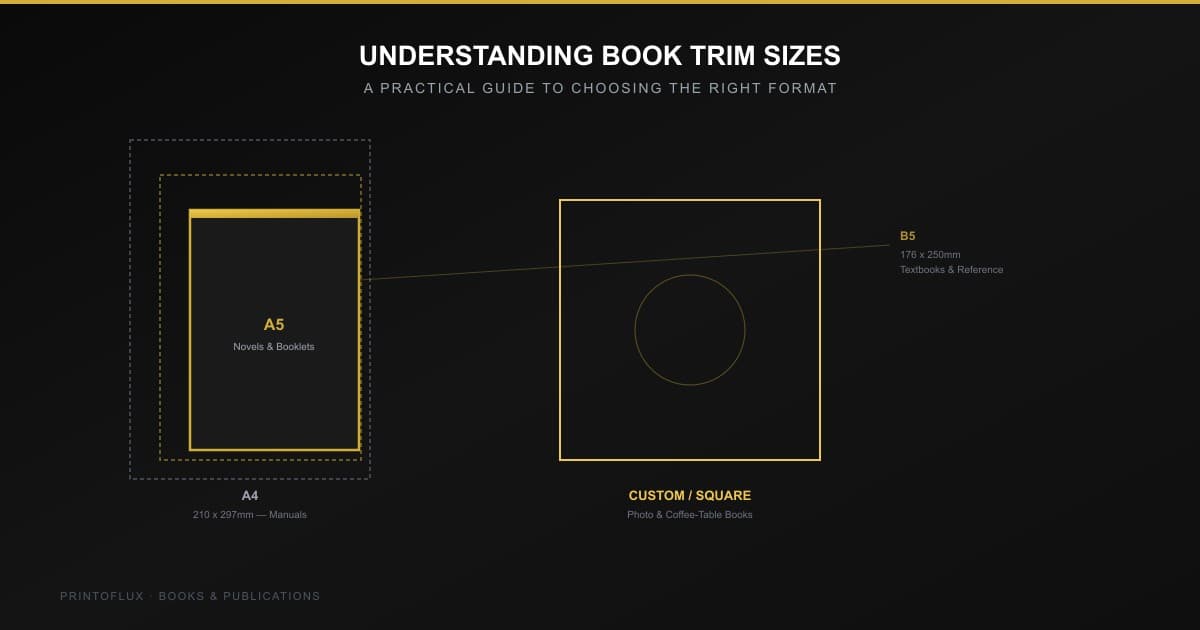
A4 (210 × 297mm) is the standard for reports, manuals, workbooks, and training materials — content where readability and full-width tables/diagrams matter more than portability. It's also the most economical size to source paper for in the UAE market, since it's the regional office-paper standard.
A5 (148 × 210mm) is the most common trim size for novels, general non-fiction, and booklets meant to be held and read rather than laid flat on a desk. It's compact enough to feel like a "real book" while still being efficient to print — most A5 books impose cleanly onto standard press sheet sizes.
Custom / Square formats show up in coffee-table books, photo books, and design-led publications where the content itself calls for a specific proportion — a square format for Instagram-style photo compilations, or a wide landscape format for panoramic photography. Custom sizes cost more per unit (they don't impose as efficiently onto standard sheets) but are sometimes the only format that does the content justice.
B5 (176 × 250mm) sits between A4 and A5, and shows up in textbooks and reference books that need more page-per-page density than A5 allows but don't need full A4 real estate.
How Trim Size Affects Page Count and Cost
A smaller trim size means fewer words fit per page, which means a longer manuscript needs more pages to print the same content — more pages means more paper and, past a certain point, a shift from saddle stitch to perfect binding. A larger trim size compresses the same manuscript into fewer pages but costs more per sheet. Neither is "cheaper" in isolation — the real cost depends on your manuscript's word count against the trim size you pick, which is why this decision benefits from being made early rather than assumed.
Trim Size and Binding Method Interact
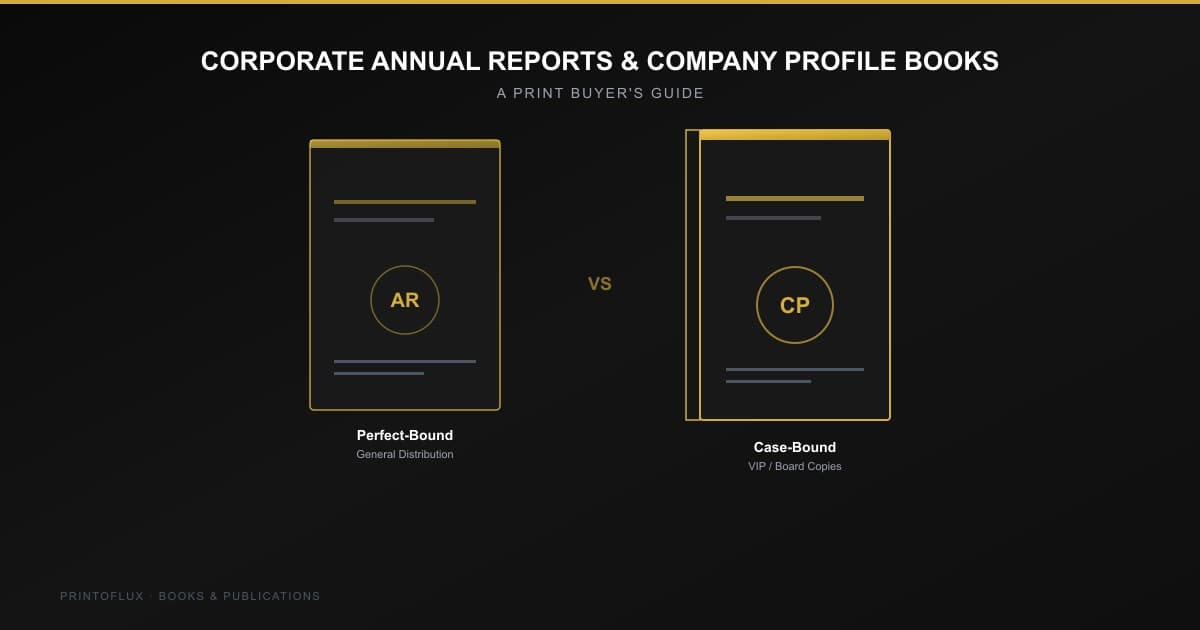
Saddle-stitched booklets work best at A4, A5, or DL — sizes that impose cleanly in multiples of 4 onto standard sheets. Perfect-bound and case-bound books have more flexibility since the page block isn't folded the same way, making them the more forgiving choice for a custom or square trim size. If you already know you want an unusual format, that alone can rule saddle stitch out before you get to page count — see our guide on saddle stitch vs perfect bound vs spiral binding for how the two decisions interact.
A Practical Way to Decide
- Start from the content, not the aesthetics. A text-heavy manual wants A4 for readability. A novel wants A5 for portability. A photo book wants whatever proportion makes the actual photos look best — decide that before picking a "nice-sounding" size.
- Check your manuscript's rough word count against the trim size. A 60,000-word manuscript in A5 runs meaningfully longer than the same manuscript in A4 — if you have a target page count or budget, work backward from there.
- Confirm the trim size before finalising binding. Once you know roughly how many pages you'll land on at your chosen trim size, binding recommendations (saddle stitch vs perfect vs case bound) follow naturally from that.
Not sure where your project lands? Our Book Print Specs Planner takes your page count, quantity, and purpose and recommends a binding and paper spec — or request a quote directly with your trim size and manuscript details for exact pricing.