
Finish Is Doing More Work Than Most Buyers Realise
Two business cards can share an identical layout, typography, and colour palette, and still feel worlds apart in someone's hand — because one of them uses finishing techniques the other doesn't. Finish is often the difference customers notice first, even if they couldn't explain why.
Foil Stamping: Metallic Weight Without Metallic Ink
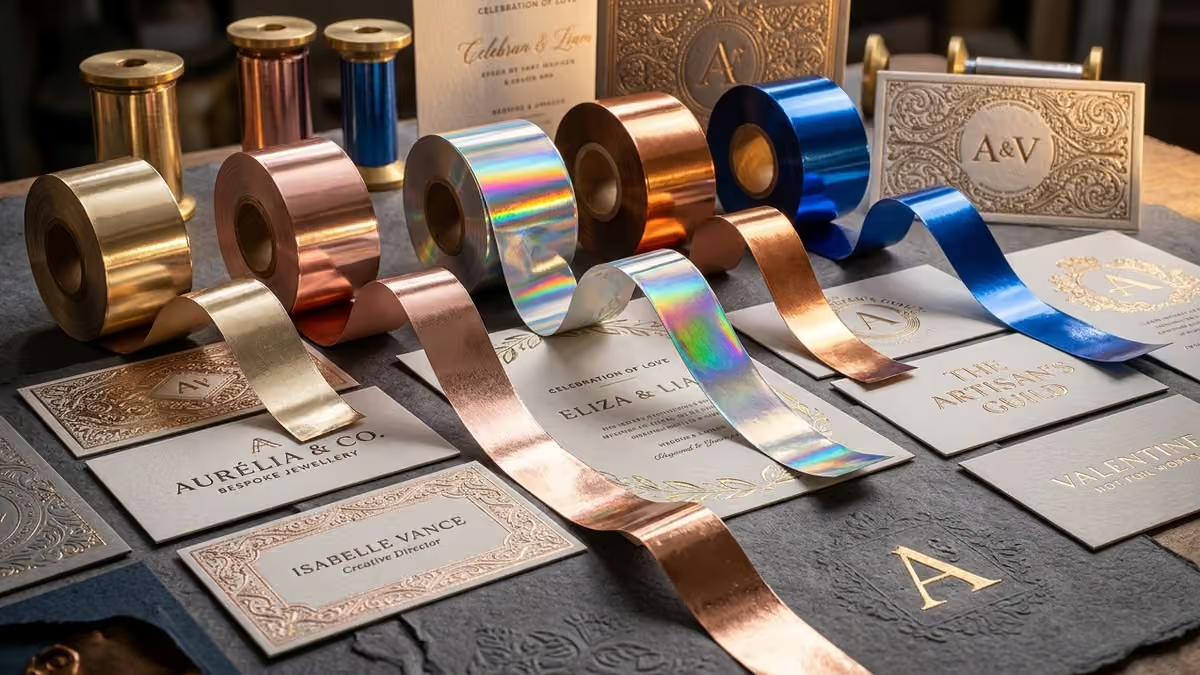
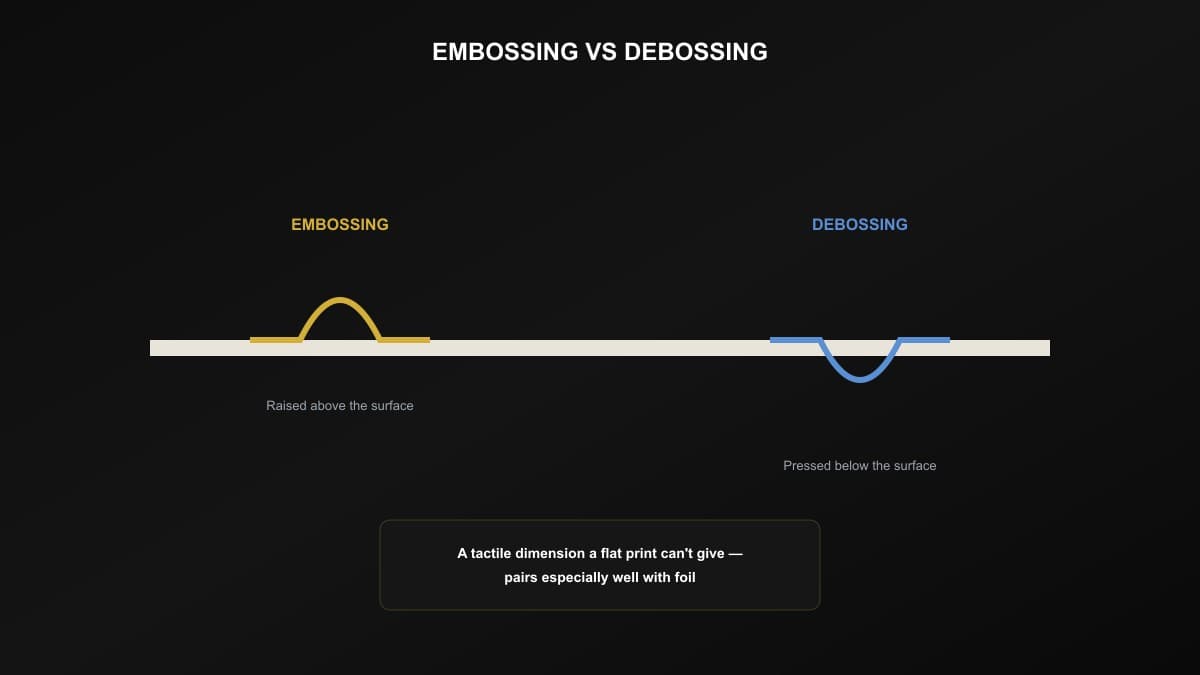
Foil stamping presses a thin layer of metallic (or pigmented) film onto the paper using heat and pressure, rather than printing metallic ink, which tends to look flat and dull by comparison. Gold and copper foils in particular read as immediately premium on dark, uncoated stock — a common combination for luxury packaging and corporate identity sets.
Embossing and Debossing: Feel, Not Just Sight
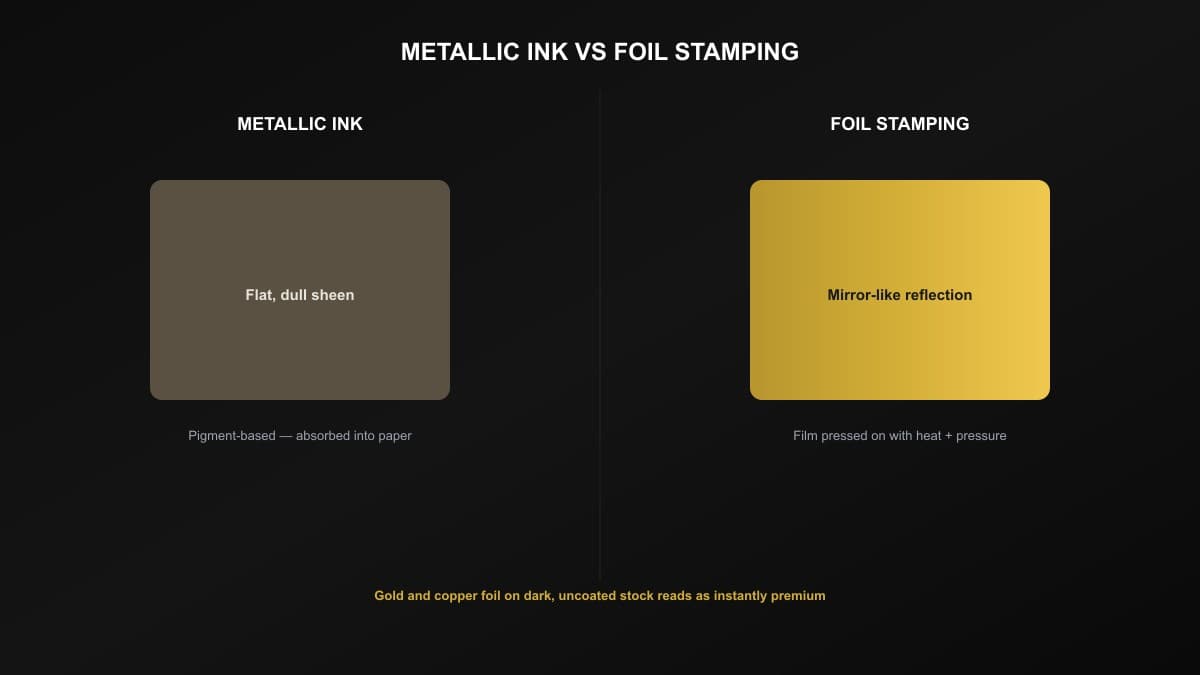
Embossing raises part of the design above the paper surface; debossing presses it below. Both add a tactile dimension a flat print simply can't — someone will often run a finger over an embossed logo before they've consciously registered why the piece feels expensive. It pairs especially well with foil (foil-emboss combined) for a logo that catches light and has physical depth.
Spot UV: Selective Gloss for Contrast
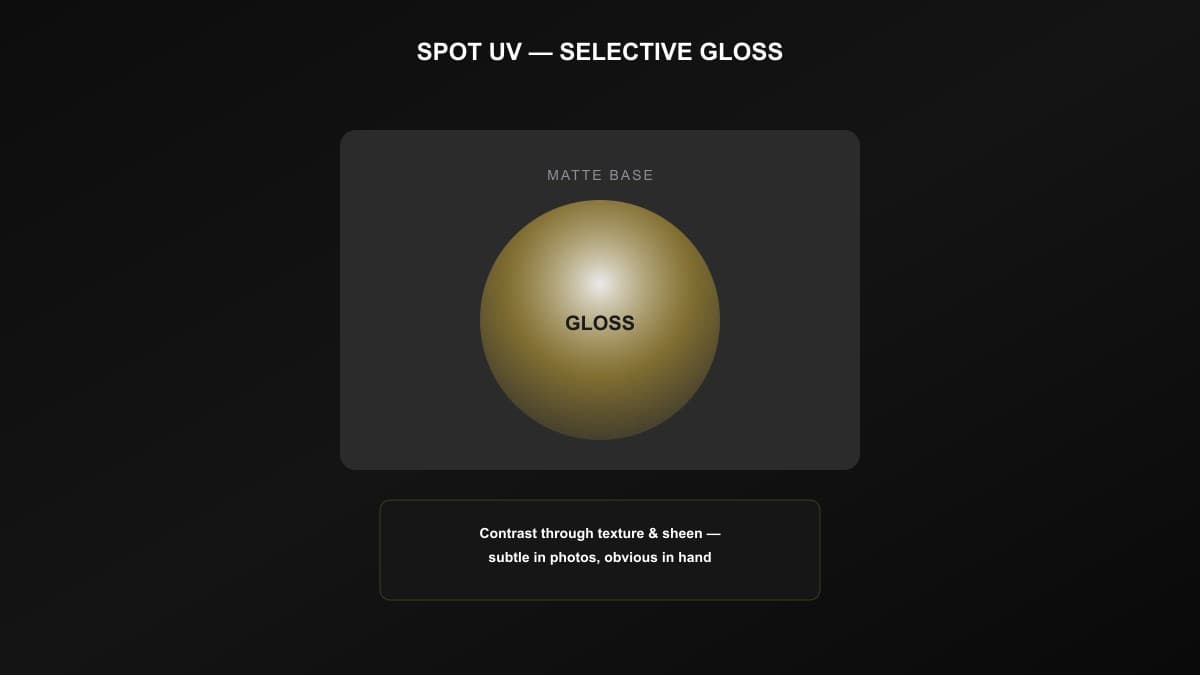
Spot UV applies a glossy coating to specific areas of an otherwise matte design — a logo, a headline, a pattern — creating contrast through texture and sheen rather than colour. It's subtle in photographs but very noticeable in hand, especially under direct light, and works well when you want emphasis without adding another colour to the design.
Where Finish Pays Off Most
Finishing has the biggest impact on items people physically hold and keep: business cards, presentation folders, premium packaging, invitation suites. It matters far less on anything read once and discarded, like a flyer — spending the budget there usually isn't worth it.
Matching Finish to Budget Realistically
Finishing adds cost per unit and often extends turnaround, since it's typically a separate pass after the main print run. The honest approach is to concentrate finishing budget on the one or two touchpoints that matter most for the piece, rather than spreading it thin across everything.
Our finishing department runs foil, emboss, and spot UV in-house, which keeps both cost and lead time more predictable than outsourcing. If you have a design you're considering finishing, request a quote with a sample area and we'll recommend what will actually show — some designs benefit far more from finish than others.