
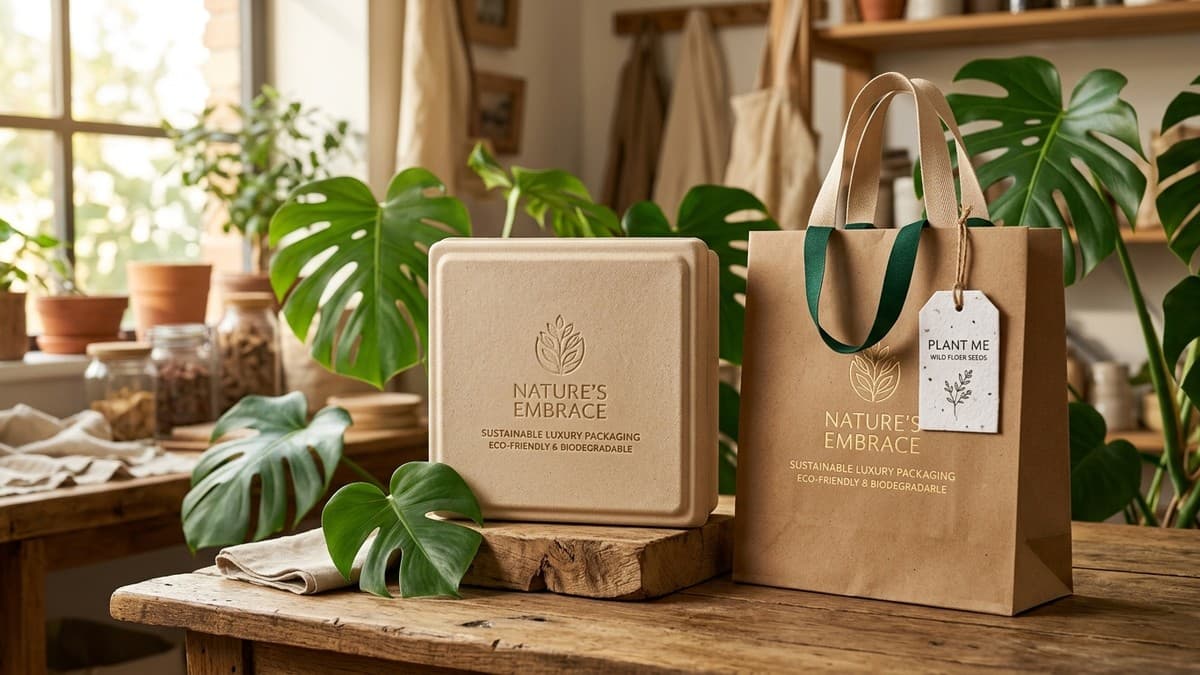
Beyond the Recyclable Logo
For years, "sustainable packaging" in the region often meant little more than a recyclable symbol printed on the box. That's shifting — driven less by marketing and more by retailer requirements, regulation, and genuine cost pressure on raw materials.
FSC-Certified Paper Is Becoming a Baseline, Not a Premium
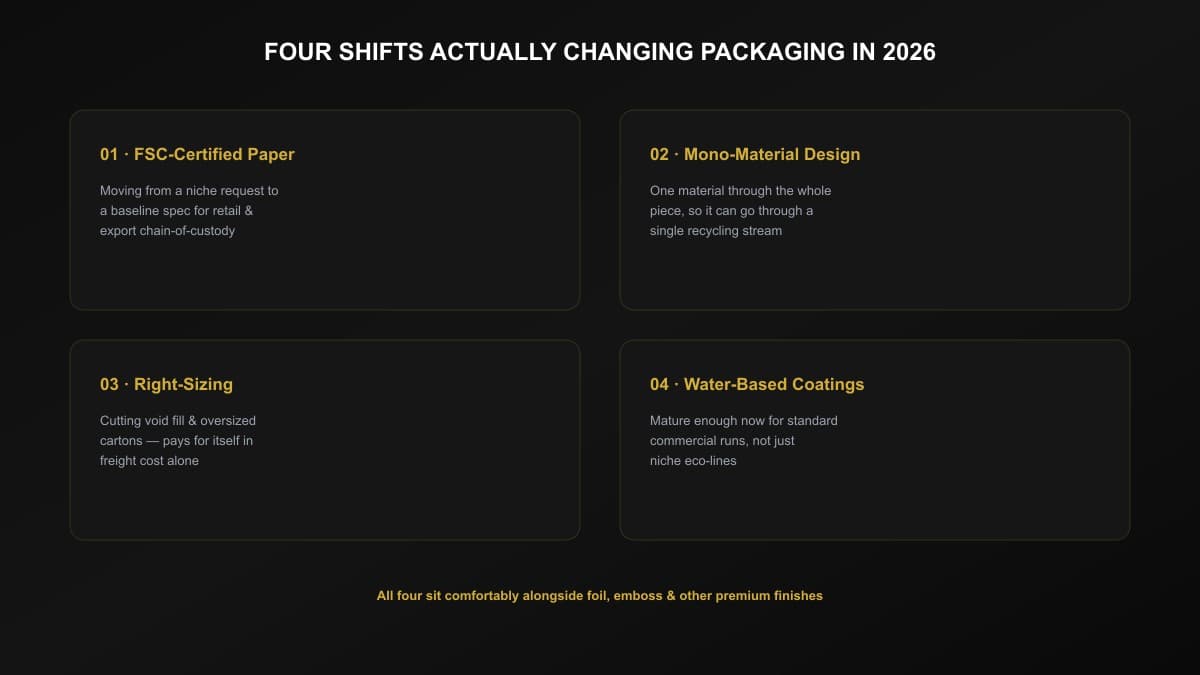
Forest Stewardship Council (FSC) certified paper stock — sourced from responsibly managed forests — used to be a niche request. It's increasingly becoming a standard specification, particularly for brands selling into retail chains and export markets that require chain-of-custody documentation from their suppliers.
Mono-Material Packaging Is Solving a Real Recycling Problem
Packaging that mixes materials — plastic-laminated paper, foil-backed board — is genuinely difficult to recycle even when each individual material is technically recyclable. The practical fix gaining traction is mono-material design: structures and finishes chosen so the whole piece can go through a single recycling stream, rather than needing to be separated first.
Right-Sizing Is an Easy Win Most Brands Skip
Oversized packaging with excess void fill isn't just wasteful, it directly increases shipping cost and volume. Reviewing whether a carton is genuinely sized to its product, rather than reused from a previous run out of convenience, is one of the simplest sustainability improvements available, and it pays for itself in freight cost alone.
Reduced-Ink and Water-Based Coating Options
Water-based coatings and reduced-coverage ink strategies have matured enough in recent years to be viable for standard commercial runs, not just niche eco-lines, without a significant compromise on finish quality for most applications.
What This Means Practically
None of this requires a brand to compromise on the premium feel of its packaging. Structural efficiency, certified paper sourcing, and mono-material design can all sit comfortably alongside foil, emboss, and other premium finishes. It's a sourcing conversation as much as a design one.
If sustainability requirements are part of your brief, whether from a retailer, an export market, or your own brand standards, raise it when you request a quote — material sourcing and structure are easier to get right at the quoting stage than after a design is finalised.